
RECAP
KEYPLAYER X CHANGE
Geopolitical Resilience 2025
Geopolitical risks have become a strategic reality. Today, they no longer affect foreign policy alone, but have a direct impact on decisions regarding locations, technologies, supply chains and markets. For internationally oriented companies, the pressure to act is increasing. At the same time, the need for orientation at eye level is growing.
Against this backdrop, KEYPLAYER and Struktur Management Partner jointly invited members of executive boards, advisory boards, owner families and other strategic decision-makers to an exclusive evening at Schloss Solitude near Stuttgart on 8 October.
According to geopolitics expert Ansgar Baums, the world is entering a phase of increasing uncertainty and bipolarity between the United States and China, with states taking on different roles between the two poles. At the same time, the pandemic, the war in Ukraine and trade conflicts illustrate the end of the stable, highly globalised order of recent decades. Companies must therefore factor geopolitical risks more systematically into their planning, diversify supply chains and strengthen their resilience through scenario analyses — particularly in high-technology sectors.
We would like to thank Ansgar Baums, Struktur Management Partner and all participants for the highly inspiring exchange and valuable impulses.


_IMPULSE SPEAKER OF THE EVENING
Ansgar Baums
Author of Die Stunde der Nashörner
Ansgar Baums is one of Europe’s leading voices in geopolitically oriented corporate strategy. In his keynote, he showed how companies can identify geopolitical risks at an early stage, classify them systematically and translate them into concrete strategic and operational capabilities — beyond abstract theory, with a clear focus on entrepreneurial practice.
#GEOPOLITICS #BIPOLARITY #USA #CHINA #SCO #SUPPLYCHAINS #RESILIENCE #RISKMANAGEMENT #HIGHTECHNOLOGY #AI

Key Takeaways
Geopolitical Resilience as a Core Corporate Capability
Ansgar Baums gave us a well-founded insight into the growing importance of geopolitical developments for corporate decision-making. His central message: geopolitics is no longer an abstract external factor, but an operational force that reaches deep into companies’ value creation, strategy and organisation.
The starting point of his analysis is the increasing instability of the global order. After decades of relative stability — particularly during the “unipolar moment” following the Cold War — the world is now entering a phase of geopolitical fragmentation. The principles that have shaped recent decades, including liberal globalisation, open markets and rules-based multilateral cooperation, are coming under increasing pressure.
// From Global Equilibrium to Geopolitical Fragmentation
Baums describes the current development as a “geopolitical recession”. The international order is shifting from a largely open, globally integrated structure towards an increasingly multipolar and, in parts, antagonistic system. In particular, the tensions between Western states and emerging powers such as China are leading to the formation of new blocs — with direct implications for markets, technologies and supply chains.
Technology plays a key role in this development. It is not only a driver of productivity and growth, but increasingly also an instrument of geopolitical power projection. Both historically and today, technological superiority has been a decisive factor in determining the relative strength of states.
// „Geotech Statecraft”: Technology as a Geopolitical Instrument
A central concept of the keynote was “geotech statecraft” — the targeted use of technological value chains for geopolitical purposes. States are drawing on a broad set of instruments: export controls, investment restrictions, tariffs, corporate sanctions, data localisation requirements and regulatory interventions in personnel structures.
These measures mean that companies increasingly have to navigate between political systems and regulatory requirements. The result is growing complexity in global business models, especially for technology-driven companies with an international footprint.
The “Geopolitical Enterprise Approach”
Against this backdrop, Baums advocates a new guiding principle: the “geopolitical enterprise”. Such a company systematically integrates geopolitical developments into its management approach — from strategic planning through to operational processes.
In concrete terms, this means not merely observing geopolitical risks, but actively incorporating them into decision-making processes. Companies must develop the capabilities to respond flexibly to different regulatory environments, localise value creation or — where necessary — consciously separate structures and systems through “bifurcation”. This includes, among other things:
adaptive supply chains
differentiated market strategies
resilient IT and data infrastructures
and institutionalised early-warning systems for risk detection
// The “Corporate Thucydides Trap” – Tensions Between Business and Politics
One particularly striking idea from the keynote was the so-called “Corporate Thucydides Trap”. While companies have traditionally benefited from open markets, they increasingly find themselves caught between economic logic and national political interests. Conflicts between commercial rationale and political regulation are therefore becoming more likely, creating fundamental strategic trade-offs for corporate leaders.
// The Future: A Bipolar Technology World
In the long term, Baums sees a structural division of the global technology landscape emerging. Instead of a unified, globally integrated system, parallel technological ecosystems are developing — particularly between China and the West. This development affects the entire IT value chain, from semiconductors and cloud infrastructure to platforms and artificial intelligence.
For companies, this means that they will increasingly need to align their organisations, technologies and markets along geopolitical lines.
Conclusion: Orientation in a New Reality
Ansgar Baums’ keynote made clear that geopolitical resilience has become a central leadership responsibility. Companies that develop a structured understanding of geopolitical dynamics at an early stage and derive concrete options for action from it will gain a decisive competitive advantage.
The event therefore impressively underlined the shared ambition of KEYPLAYER and Struktur Management Partner (SMP): to provide strategic decision-makers with orientation at eye level — in a world in which geopolitical risks have become a lasting reality.
THE GEOPOLITICAL RESILIENCE TEAM AT
KEYPLAYER
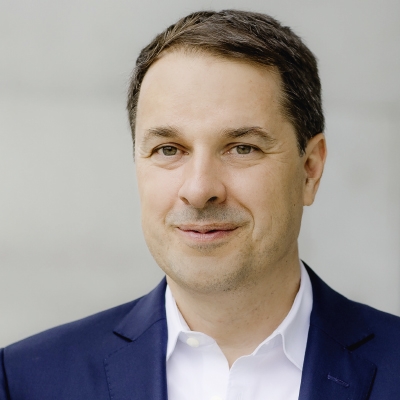
SEBASTIAN
BRETAG
CEO
Sebastian Bretag has more than 15 years of experience in management consulting, restructuring, general management and interim management. Today, as Managing Director of KEYPLAYER Interim Management GmbH & Co. KG, he supports mid-sized companies and private equity firms as a trusted advisor in solving challenging management tasks and filling key positions.

DANIEL
SPOO
PARTNER & DIRECTOR MECHANICAL AND PLANT ENGINEERING
Daniel Spoo has nearly 15 years of experience in the manufacturing industry, particularly in mechanical and plant engineering as well as automation and electrical engineering. His focus is on restructuring, transformation and performance projects, as well as the placement of top management positions. Previously, he held roles as a Director and entrepreneur, and worked in senior positions at a bank and a global internet platform.

CARLA
SWAYNE
DIRECTOR
INDUSTRIALS
Carla Swayne is an experienced change management expert with a particular focus on transformation processes in manufacturing environments. She has extensive expertise in supporting companies through complex transformation processes. In recent years, Ms Swayne has advised German SMEs and corporate groups across industries in overcoming challenging business situations.
OUR PARTNER:


GEORGIY
MICHAILOV
MANAGING PARTNER
STRUKTUR MANAGEMENT PARTNER
Georgiy Michailov studied business administration and economics in Uzbekistan and Freiburg. Since joining SMP, he has progressed through all career levels to Managing Partner. Among other areas, he is responsible for strategy, sales and marketing, and specialises in turnaround, growth and business models. With more than 75 client engagements, he is considered an experienced advisor to upper mid-sized companies with an international orientation.
- Home
- Keyplayer X Change 2026
- RECAP X CHANGE 2025
- RECAP X CHANGE 2024
- Recap Automotive Leadership Forum 2026
- Recap Automotive Roadshow 2025
- Recap Geopolitical Resilience 2025